
Patiala
Raj Pandits History that can be examined.
We know where we want to go. We should also know where we come from.
A hedge against time for the generations that follow: preserving family memory, testing it against evidence, and publishing what remains unverified.
“Lineage deserves reverence. History deserves evidence.”
A modern identity shaped around Pandit Mulk Raj.
A modern Rajpandit identity inspired by Pandit Mulk Raj’s life journey—Kashi and Shaivite symbolism interpreted through princely-era heraldic language. It is not a historical emblem of Patiala State or its royal household.
Family memory, tested against the record.
The site documents Patiala’s court, the Raj Pandit tradition and Pandit Mulk Raj. Claims carry an evidence status; archival leads carry exact references when known.
The Court
Patiala State, the Phulkian lineage and the royal-household world in which Raj Pandits served.
Enter historical Patiala →The Office
What “Raj Pandit” and “Raj Purohit” meant—and what the evidence does not permit us to assume.
Understand the office →The Lineage
Pandit Mulk Raj from Mehatpur to Banaras, Alwar and Patiala: family memory beside the records that could verify it.
Explore the project →Five labels. No ambiguity.
Every claim is marked so documentation, corroboration, family memory, hypothesis and unresolved evidence remain distinct.
Source records, without reproducing third-party imagery.
The project retains links to relevant historical records while avoiding external image hot-linking and unnecessary republication of third-party visual material.
Patiala court group, c. 1910
A period court-group record associated with Maharaja Bhupinder Singh and Sir Ranjitsinhji remains listed as a research source; the image itself is not reproduced here.
Open source record →Seven rulers of Patiala State
The late nineteenth-century painted panel remains a useful contextual source for the ruling house; this site now links to the record rather than reproducing the image.
Open source record →Moti Bagh Palace, c. 1922–23
The Hunter family album record remains relevant to the palace setting of the period; the external photograph is no longer embedded on this site.
Open source record →Pandit Mulk Raj: memory, evidence, proof.
Family tradition places Mulk Raj in Banaras/Kashi, Alwar and later Patiala’s royal household, with a residence opposite Shahi Samadhan. His official Patiala role is not yet proved by a primary record in hand.
The historical world is plausible and the archival routes are concrete; the central Mulk Raj appointment/service claim remains yet to be independently verified by a primary record. The website will change that status only when the evidence changes.
Patiala today, before the riyasat.
Contemporary orientation only—not evidence of historic boundaries, ownership or court geography.
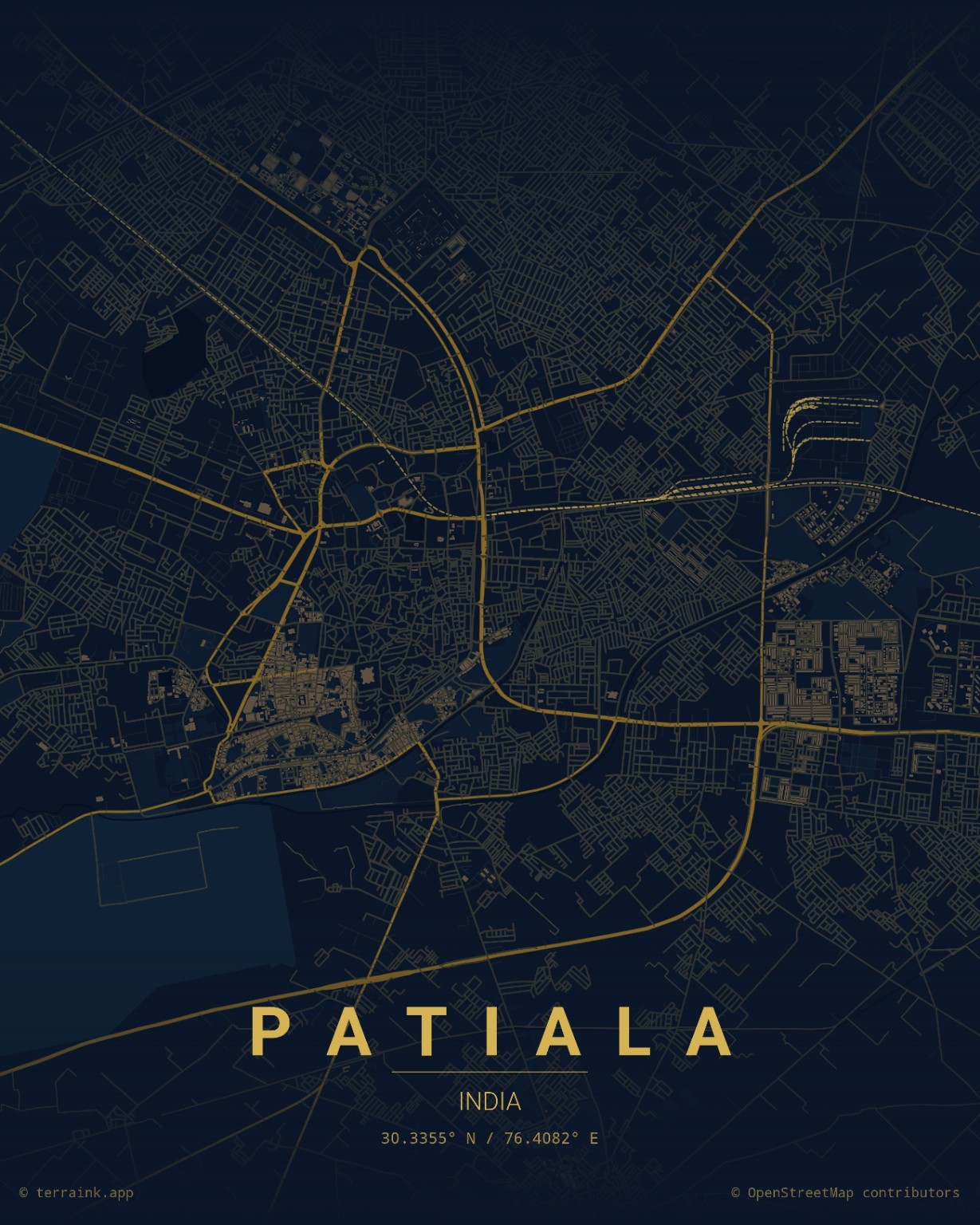
Modern schematic supplied to the Patiala Raj Pandits project, 2026. Not historical evidence.
Do you hold something that could help authenticate the family record?
Photographs, letters, princely decrees or sanads, service or property records, newspaper cuttings and family recollections can help test what has been passed down.
Every submission begins as a lead. It is attributed, compared with the existing record and independently verified where possible before any historical status changes.